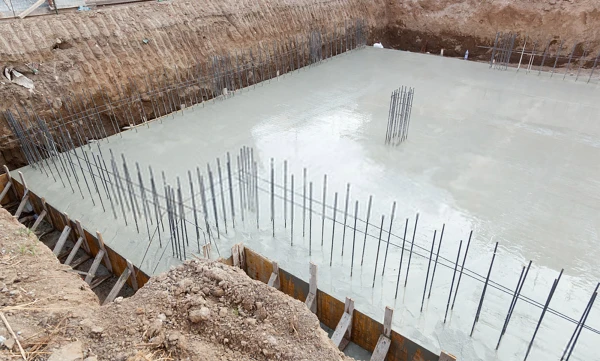
We have been working since 2008
and provide high-quality services
5
Rating based on
reviews from our
customers
Daily from 8:00 to 20:00
We have been working since 2008
and provide high-quality services
5
Rating based on
reviews from our
customers
Daily from 8:00 to 20:00
A slab foundation is a commonly used type of structure in building construction. It consists of a concrete layer, typically a slab, cast in formwork directly on site. The advantage of this type of foundation is that it eliminates the need to dig deep into the ground.
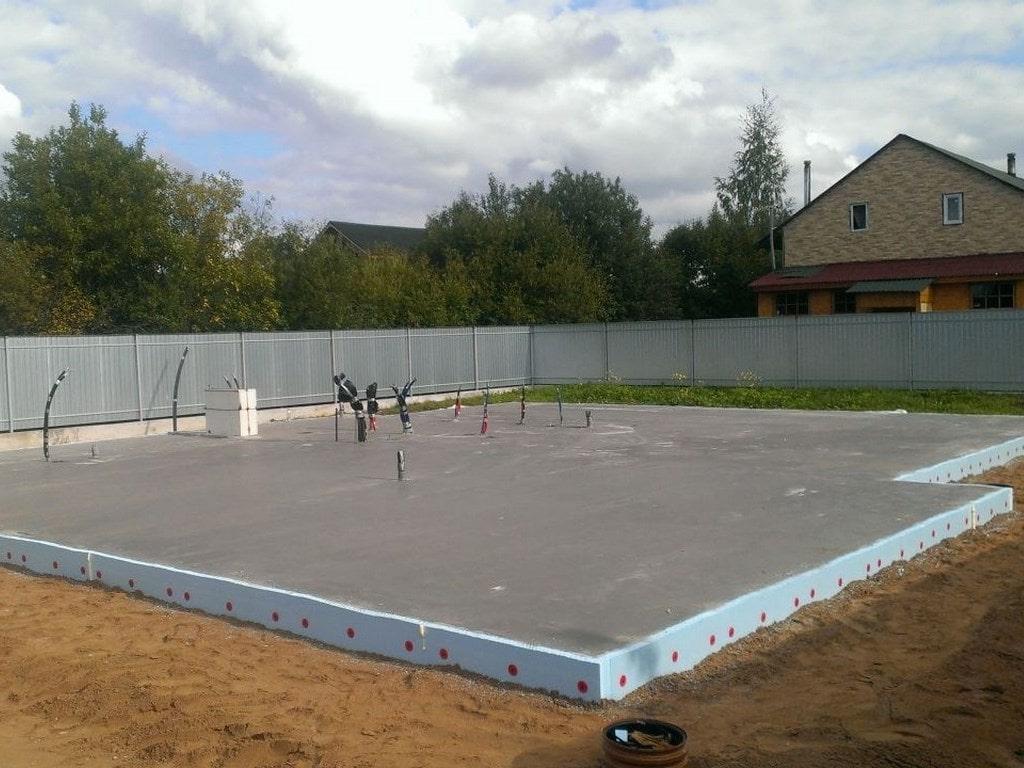
A slab foundation is ideal for weak, shifting, and heaving soils, such as peat, clay, and loam. Its structural properties allow for optimal load distribution over large areas, preventing deformation and subsidence. This type of foundation is commonly used for shallow buildings no more than three stories tall. It is most often used in the construction of cottages, duplexes, and single-family homes.
Recommended wall materials for slab foundations include brick, stone, and aerated concrete. Frame houses are also built on slab foundations. It is also an ideal solution for buildings without a basement, such as garages, workshops, or saunas.

A strip foundation can be considered a type of shallow-slope strip foundation. It is a fairly rigid structure, constructed as a reinforced monolithic slab of reinforced concrete. This monolithic foundation is laid around the entire perimeter.
By moving with the soil, the foundation prevents building collapse. For this reason, it is often called a floating foundation. It has the ability to level the ground, prevent meltwater and groundwater from penetrating into the basement, and easily withstands significant loads.
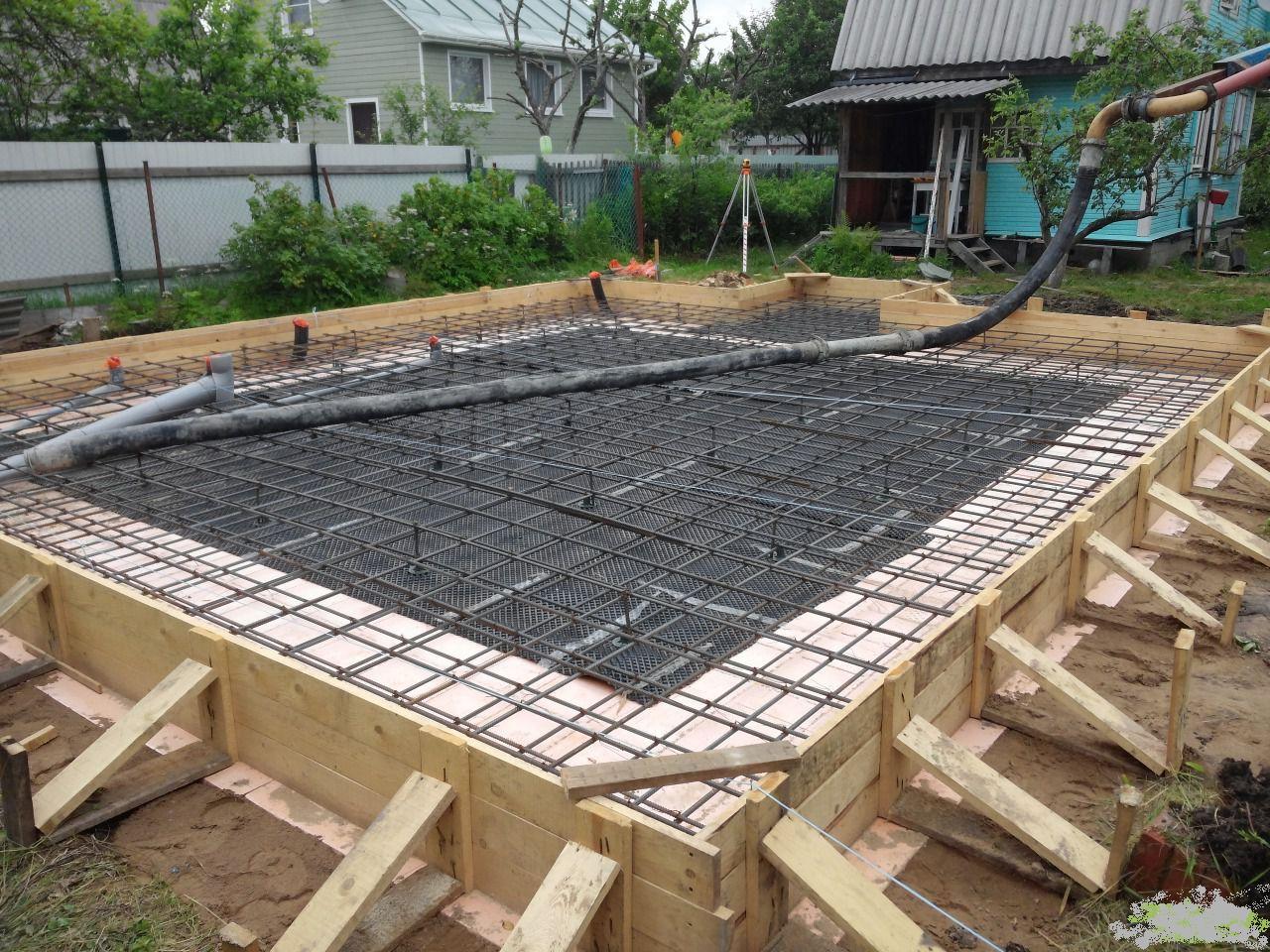
A slab-type foundation can be constructed as a single unit or comprise several blocks. The choice of format depends on the surveyor's or expert's opinion, as well as the design documentation.
The process of laying such a foundation consists of the following:
Next, the concrete mixture is poured. M400 cement is typically used. Care must be taken to ensure the integrity of the reinforcement. During pouring, concrete is delivered through chutes or concrete pump pipes. The surface is leveled and compacted using specialized equipment. The concrete is vibrated until all air bubbles are removed from the surface.
Furthermore, it is important to periodically wet the surface of the concrete slab and immediately cover it with film. The formwork can be removed after 6-7 days, but it is important to remember that the foundation fully sets within 28 days.
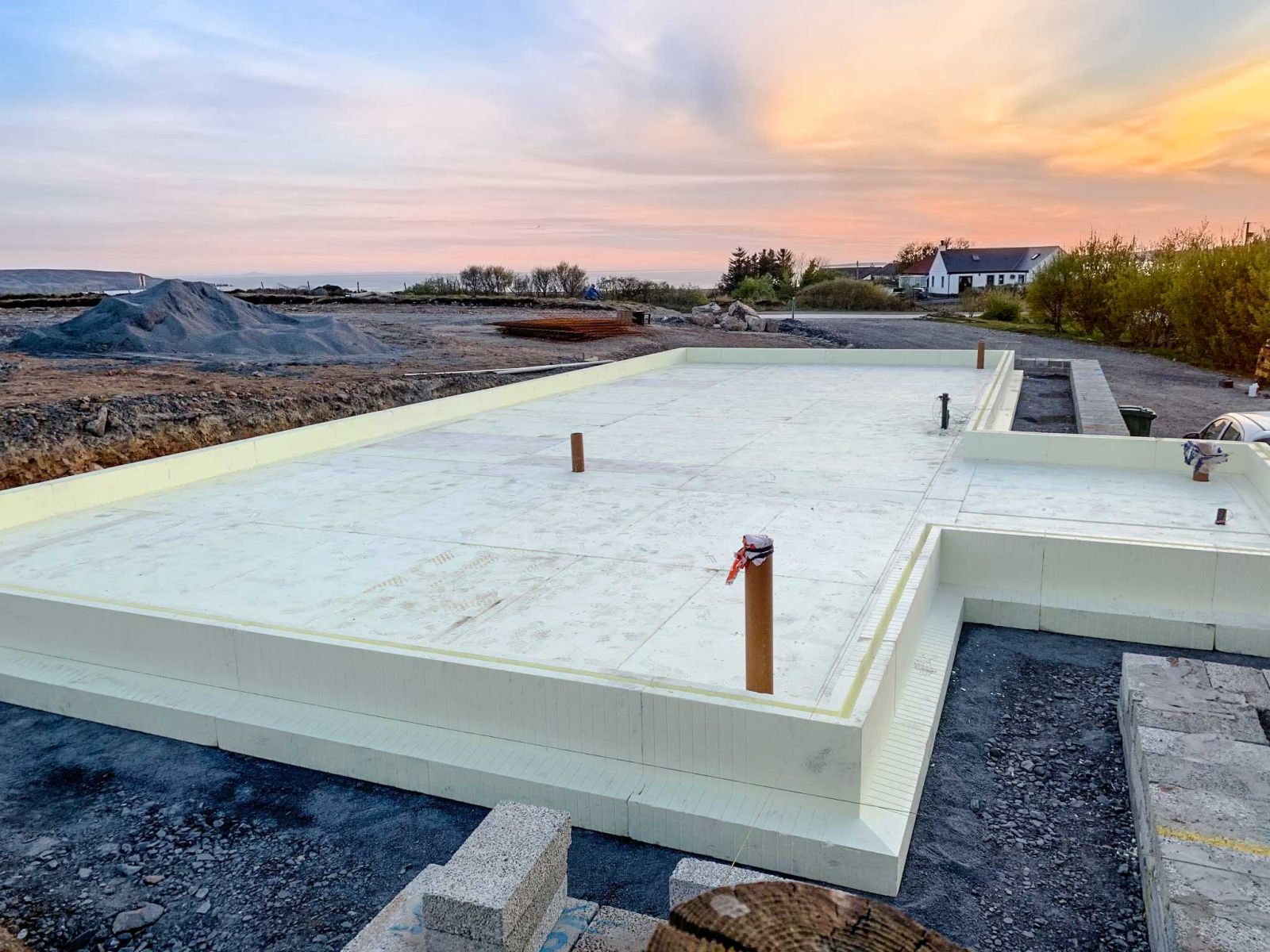
The price of a foundation pouring service depends on the cost of concrete, the type of work, the thickness of the slab, and regional specifics. This is specified in the estimate.
A thick slab will cost more due to the need to use more concrete and reinforcement. A turnkey service includes all stages of the work, including foundation preparation. On average, a foundation calculation assumes the following price per cubic meter of concrete:
You can order this service from the specialized construction company "RСС ALBA," where all work will be performed in stages in accordance with the technology. As a result, the customer receives a structure ready for further construction, ensuring high foundation strength, reliability, and structural stability.