We have been working since 2008
and provide high-quality services
5
Rating based on
reviews from our
customers
Daily from 8:00 to 20:00
We have been working since 2008
and provide high-quality services
5
Rating based on
reviews from our
customers
Daily from 8:00 to 20:00
A septic tank is the optimal way to organize a private home's sewerage system. This is due to its convenience and environmental friendliness compared to a conventional cesspool. Furthermore, septic tanks are less expensive to build and significantly save space compared to on-site treatment facilities. Septic tanks also have a long service life.
.jpg)
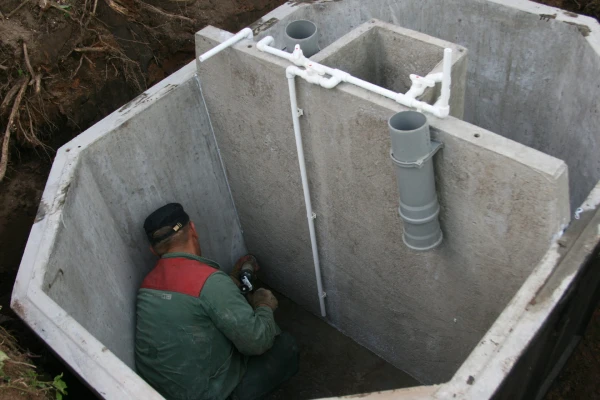
Essentially, it is a concrete reservoir for collecting and treating wastewater, incorporating two wells. The first well is a prefabricated settling tank, sealed and designed to separate heavy fractions from the wastewater. The second well is a filtration well. It has no bottom, instead creating a filter bed of sand, gravel, and crushed stone to drain the treated wastewater into the ground.
The specifics of a septic tank's operation are quite simple. If space is limited, a single well can be constructed, but it must be divided into two chambers. In this case, it will handle a small volume of wastewater.
Building a septic tank yourself is possible with some skill. However, most customers make the right decision by seeking help from professionals offering turnkey construction services. Preparation for such work involves several considerations, including the following:
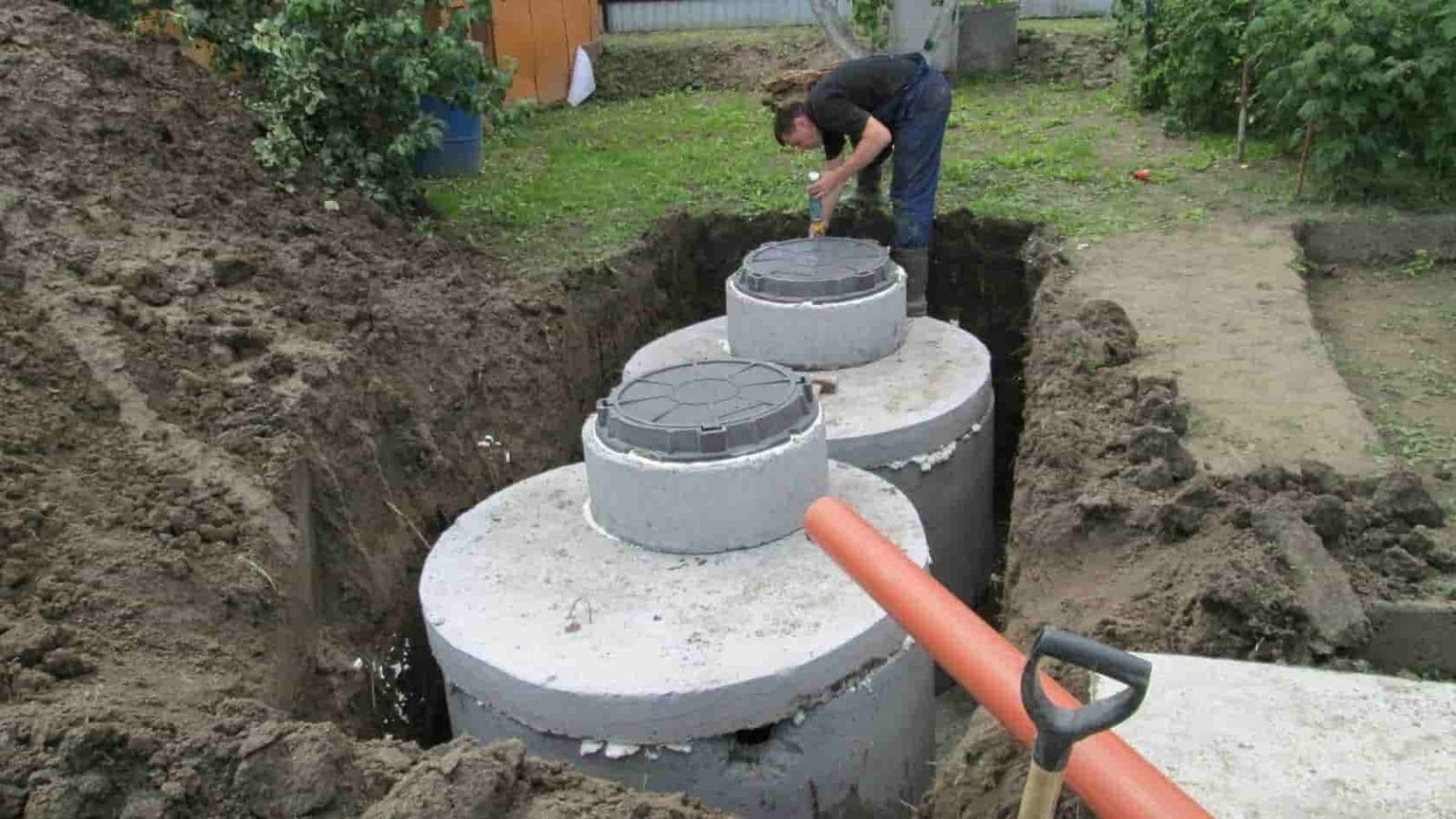
The main factor considered when calculating the final construction cost is the quality and price of the concrete used for the septic tank, determined by the specific grade of cement chosen. The volume of the future facility and the need for additional options, such as external waterproofing, the use of manholes, washers, bio-treatment filter hatches, and a drainage system, are also taken into account. The cost of specialist installation work should also be factored in.
On average, the approximate price of septic tanks, depending on their volume, includes the following formats:
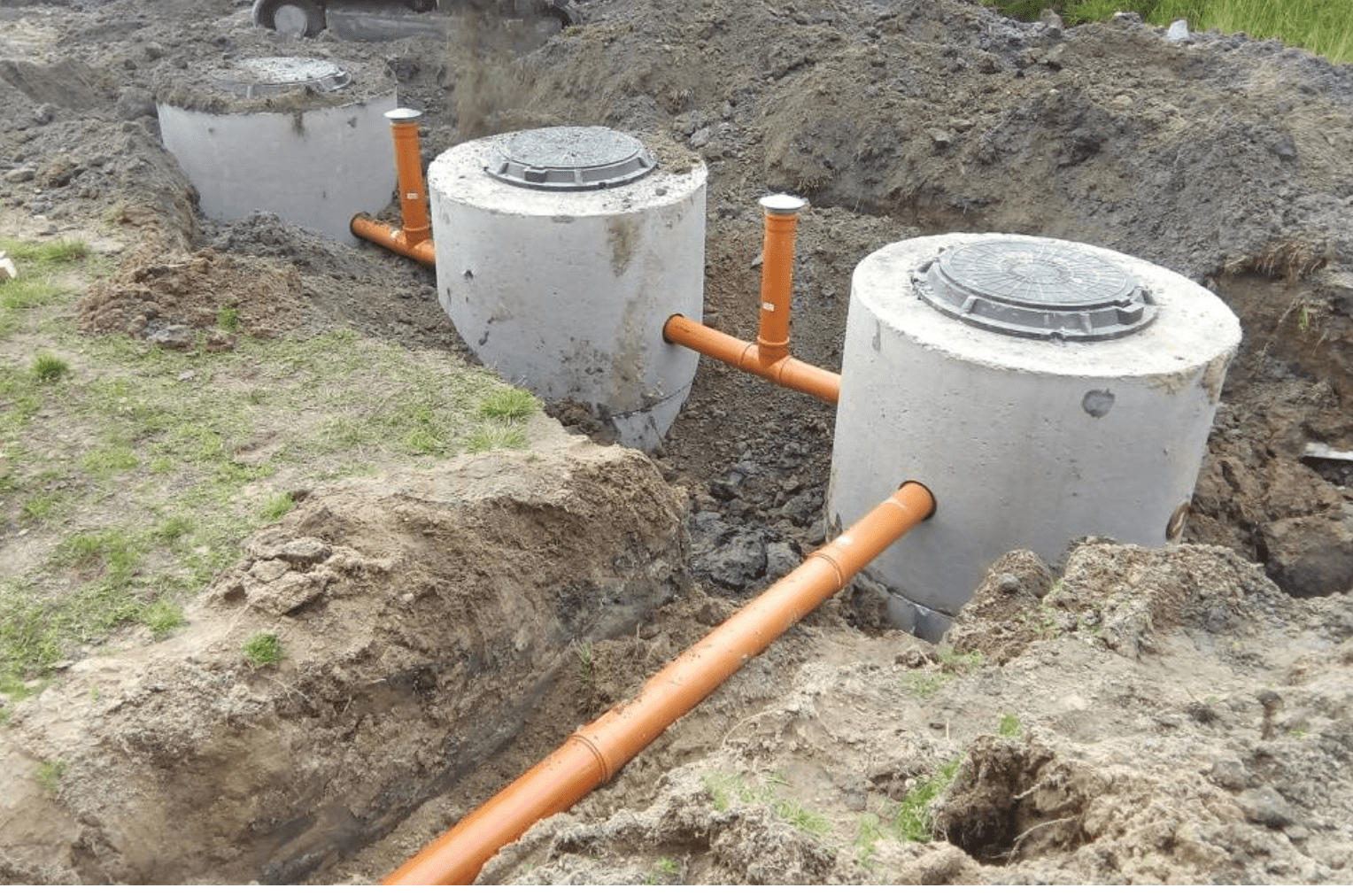
This method of installing a stand-alone sewer system is considered the most common method of constructing a facility. For example, for a 3 m³ septic tank, the following is required:
Septic tank installation involves several stages, including excavation work, installation of a concrete bottom and reinforced rings, provision of an inlet and outlet, and ventilation. Insulation of the septic tank may also be required.
Excavation work involves digging a pit of the required size. It is dug no deeper than 4 m to avoid difficulties when subsequently pumping the septic tank with a sewage truck. The septic tank is then installed by laying the rings. The joints are sealed.
The inlet pipe from the house must be at least 70 cm deep. The outlet pipe from the septic tank is located 3-5 cm below the inlet pipe. The ventilation pipe is routed to the roof of the house to help eliminate unpleasant odors.
The cost of such work, when calculating the septic tank and wells made of concrete rings, may increase if there are no convenient access roads to the installation site.