We have been working since 2008
and provide high-quality services
5
Rating based on
reviews from our
customers
Daily from 8:00 to 20:00
We have been working since 2008
and provide high-quality services
5
Rating based on
reviews from our
customers
Daily from 8:00 to 20:00
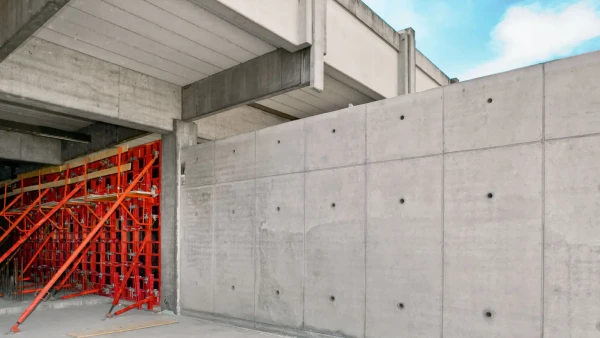
Concrete remains a popular building material in today's market. Concrete construction is a key focus for specialized construction companies. Among the most sought-after materials is the concrete wall, characterized by its structural strength and resistance to heavy loads.
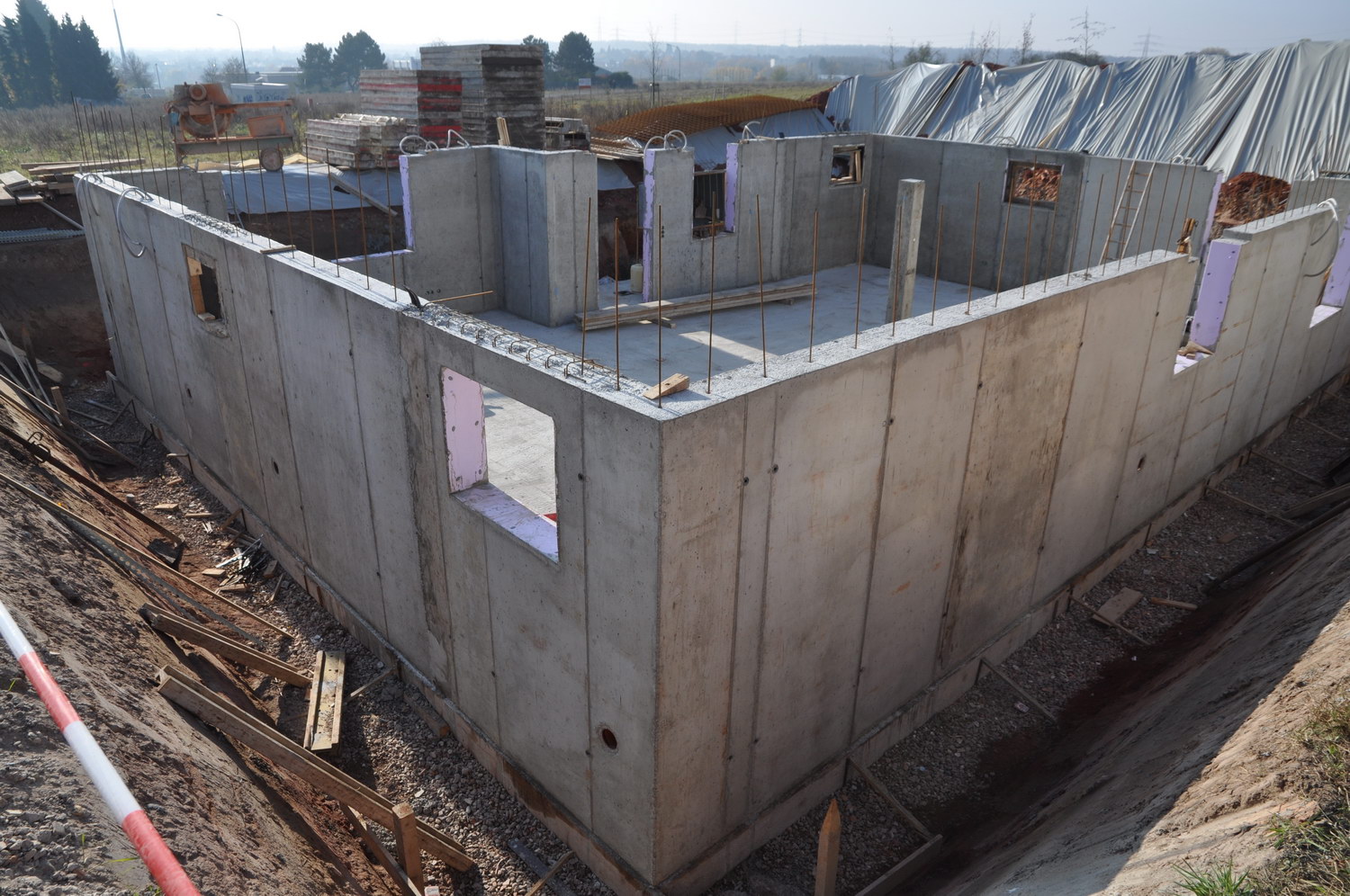
This format is worth choosing if you need to build a house quickly and affordably. Walls constructed from M300 concrete boast numerous advantages:
Reliability is also noted—a concrete wall can withstand various types of loads. Monolithic structures made from M400 cement have proven particularly effective in this regard.
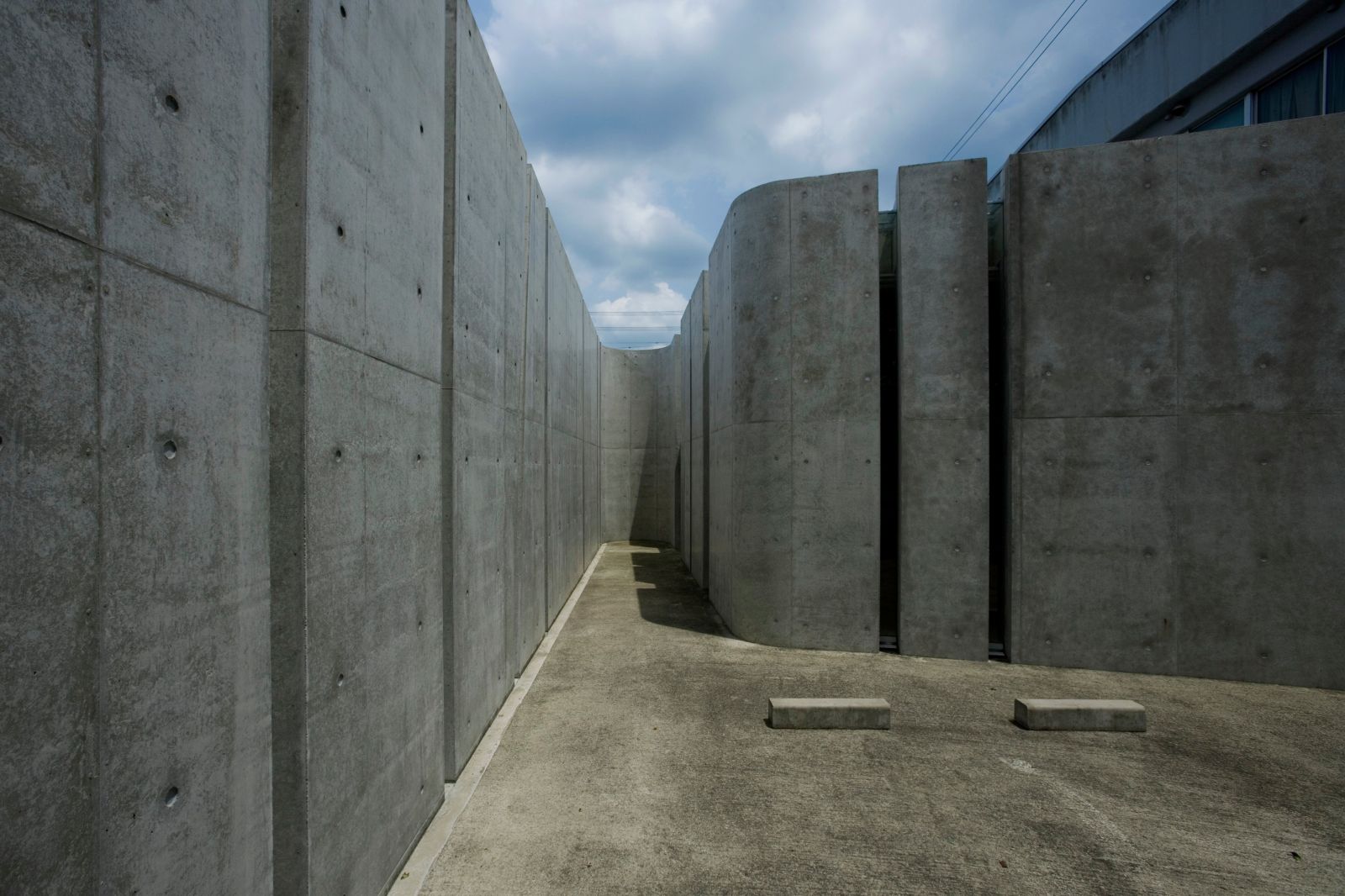
A monolithic wall is considered the most durable and reliable, allowing for a building that can last for decades. Its construction begins after the foundation is laid.
The main stages of concrete wall construction include the following:
Forming the reinforcement base using a welding machine or binding wire;
Installing the formwork;
Pouring, placing, and compacting the prepared concrete mix;
Concrete curing;
Removing the formwork;
Insulating the walls and waterproofing the structure, if necessary.
Calculating the wall reinforcement is an important step that should be addressed before work begins. This takes into account the potential loads on the walls and foundation, and determines the spacing between the reinforcement elements.
It is also important to select the correct thickness of the elements and consider the temperature conditions in the construction zone. All these parameters are selected and evaluated during the design phase of the project.
Reinforcement elements typically use metal with a diameter of 8-12 mm. The wire size should be 5-6 mm, with a connection pitch of 10 to 20 cm.
Wall formwork is made from planks or metal sheets. It is assembled using fastening systems, and the structure must contain internal and external struts. After the reinforcement is installed, ready-mixed concrete is added to the wall. Each new batch is placed on top of the previous fresh batch during pouring.
Concrete pouring begins at the corner, gradually moving toward the center. This type of construction work must be completed quickly, as the entire section must be poured virtually simultaneously. Only then can the finished reinforced concrete wall achieve maximum strength. To prevent internal voids during pouring, the concrete is compacted using a deep-well construction vibrator. This removes any voids, strengthening the concrete. Formwork is removed approximately 4-6 days after pouring.
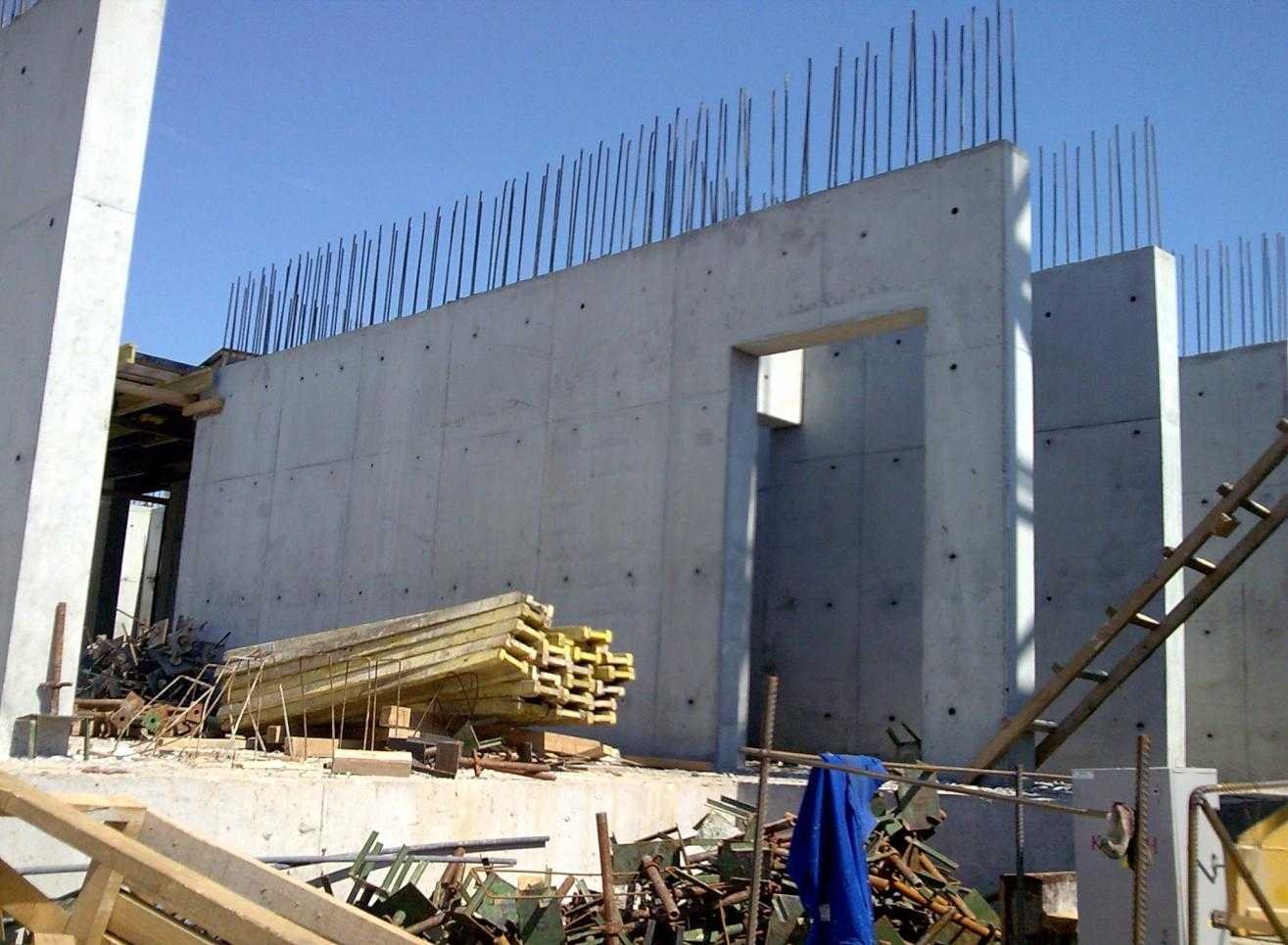
Concreting walls is a complex task, requiring significant physical effort and specialized equipment. Therefore, in such a situation, it's best to contact the professional company RСC ALBA, which offers turnkey construction. Working with this company will bring numerous benefits:
A professional construction company offers reliability and comfort, as well as prompt project completion in accordance with the intended concept.