We have been working since 2008
and provide high-quality services
5
Rating based on
reviews from our
customers
Daily from 8:00 to 20:00
We have been working since 2008
and provide high-quality services
5
Rating based on
reviews from our
customers
Daily from 8:00 to 20:00
Stairs are a necessary feature of multi-story buildings, ensuring safe and convenient movement between different levels. They are installed in the spaces between floors, basements, or attics. Stairs serve many practical functions for servicing the building and also serve as a decorative element. Wood or concrete are most often used for the construction of such structures. The latter material has many advantages.
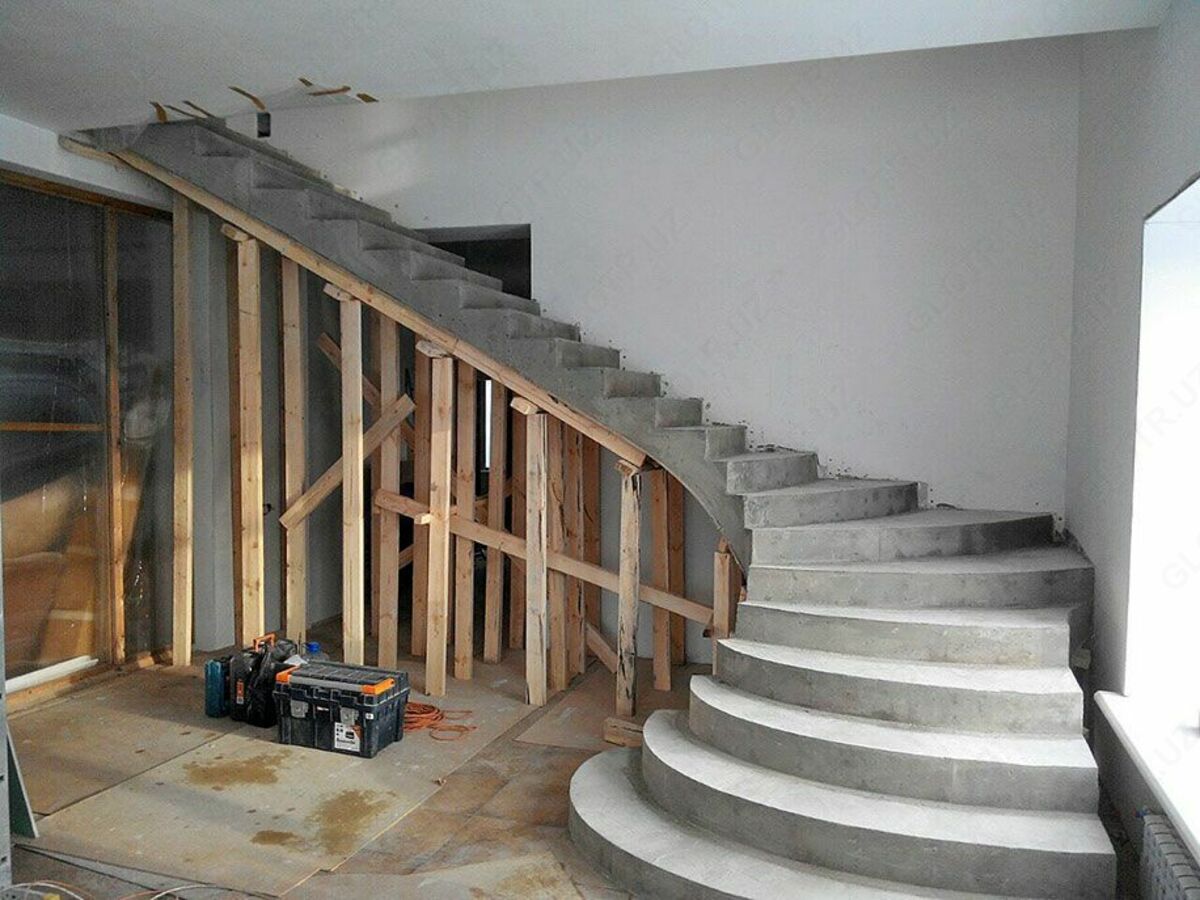
Concrete steps are recommended for installation in monolithic buildings designed in a brutalist and modern style. These buildings are typically constructed from cement or brick. The most important advantage is the ability to create a variety of shapes and cladding materials, including stone and tile for stairs. Other advantages include:
It's also worth noting that concrete steps can be erected quickly, in just a few days.
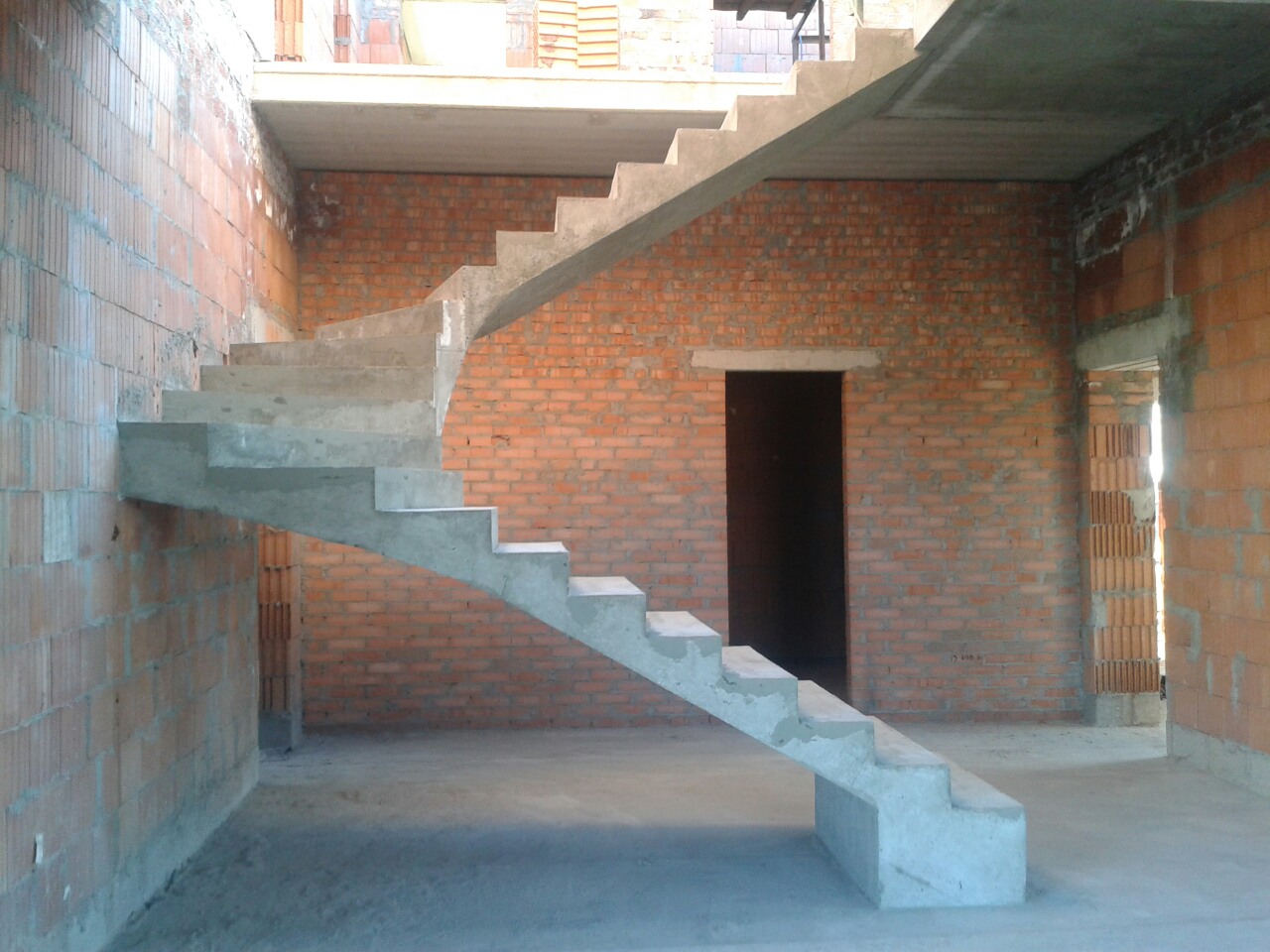
A monolithic structure of this type should be poured in one go, ordering excess concrete in advance. Typically, M300 or M250 concrete is recommended. The use of plasticizers to achieve the plasticity of the mixture is also recommended.
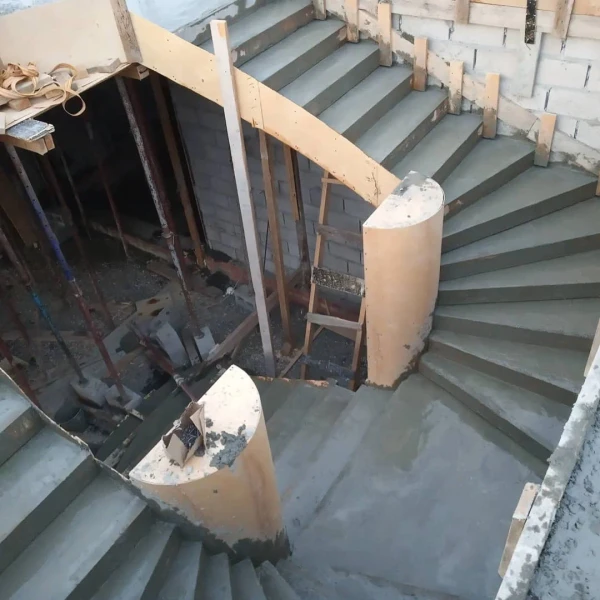
The concrete staircase pouring process itself involves the following steps:
After completing the work, wait 2-3 hours, then treat the stair spans with a plastic mortar to reinforce the steps. The formwork is removed after 4 weeks—this time is sufficient for the concrete to fully harden. Next, finish the stairs and risers, install the railings, and fences.
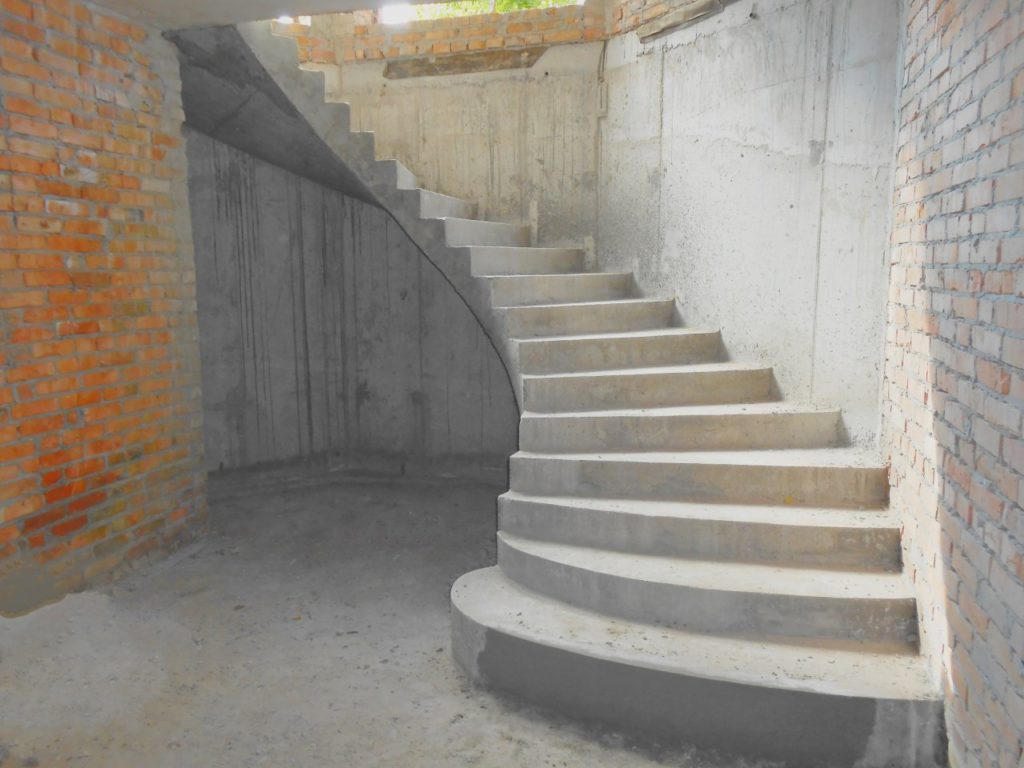
The cost of the finished project depends on several factors. These include the grade of concrete, the specifics of the mortar preparation, the size of the staircase, the urgency of the work, and the type of project (exterior or interior).
Furthermore, the type of concrete staircase is also a must-take into account. Typically, they are manufactured in the following format:
Only those with construction experience can build a staircase themselves. It's best to contact a professional company for installation.
RСС ALBA specialists will help you decide on the staircase format and design, calculate the step height, advise on the correct material selection, create a concrete porch if necessary, and complete all stages of the work, including waterproofing the structure, in a strict sequence—on time and to a high standard.