We have been working since 2008
and provide high-quality services
5
Rating based on
reviews from our
customers
Daily from 8:00 to 20:00
We have been working since 2008
and provide high-quality services
5
Rating based on
reviews from our
customers
Daily from 8:00 to 20:00
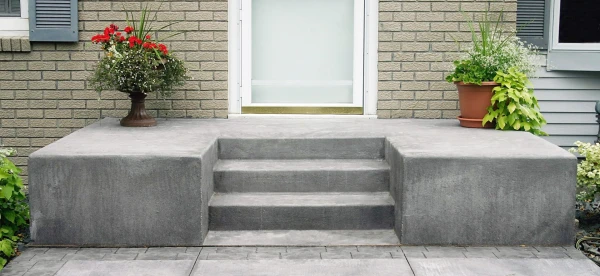
The essential elements of any private home are the porch, vestibule, and terrace. While a canopy over the porch provides protection from rain, wind, and snow, creating a comfortable environment for residents when entering and exiting the building, a terrace is simply beautiful. A porch creates the necessary climate buffer and helps remove dirt and moisture from the entrance.
A terrace can be built separately or integrated into the porch, fulfilling its functions. However, this element is most often decorative. Typically, this extension is used for leisure activities and al fresco dining. It is also perfect for children's play and provides protection from rain and the scorching sun.
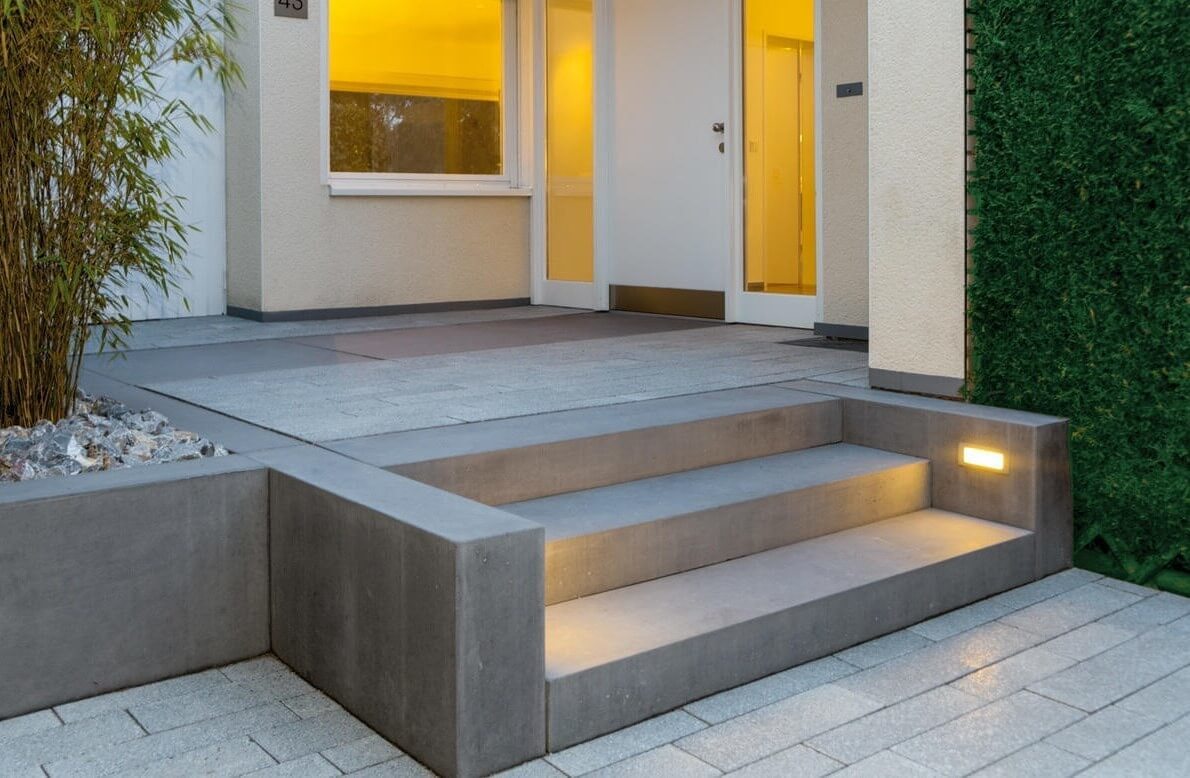
Concrete is the material typically used for building this extension. The process itself is carried out in stages, beginning with site planning and preparation. This requires removing excess vegetation and debris, and removing approximately 25 centimeters of topsoil. Next, a sand and crushed stone bed should be created on the site and compacted thoroughly. After this, the following steps are completed:
For winter concreting, special plasticizers are added to the mixture. After pouring the foundation, the concrete must be maintained until it has completely dried. This usually takes approximately one month. The concrete surface is covered with a film or cloth soaked in water to prevent moisture evaporation.
Once the mortar has completely dried, waterproof the concrete and begin finishing the façade.
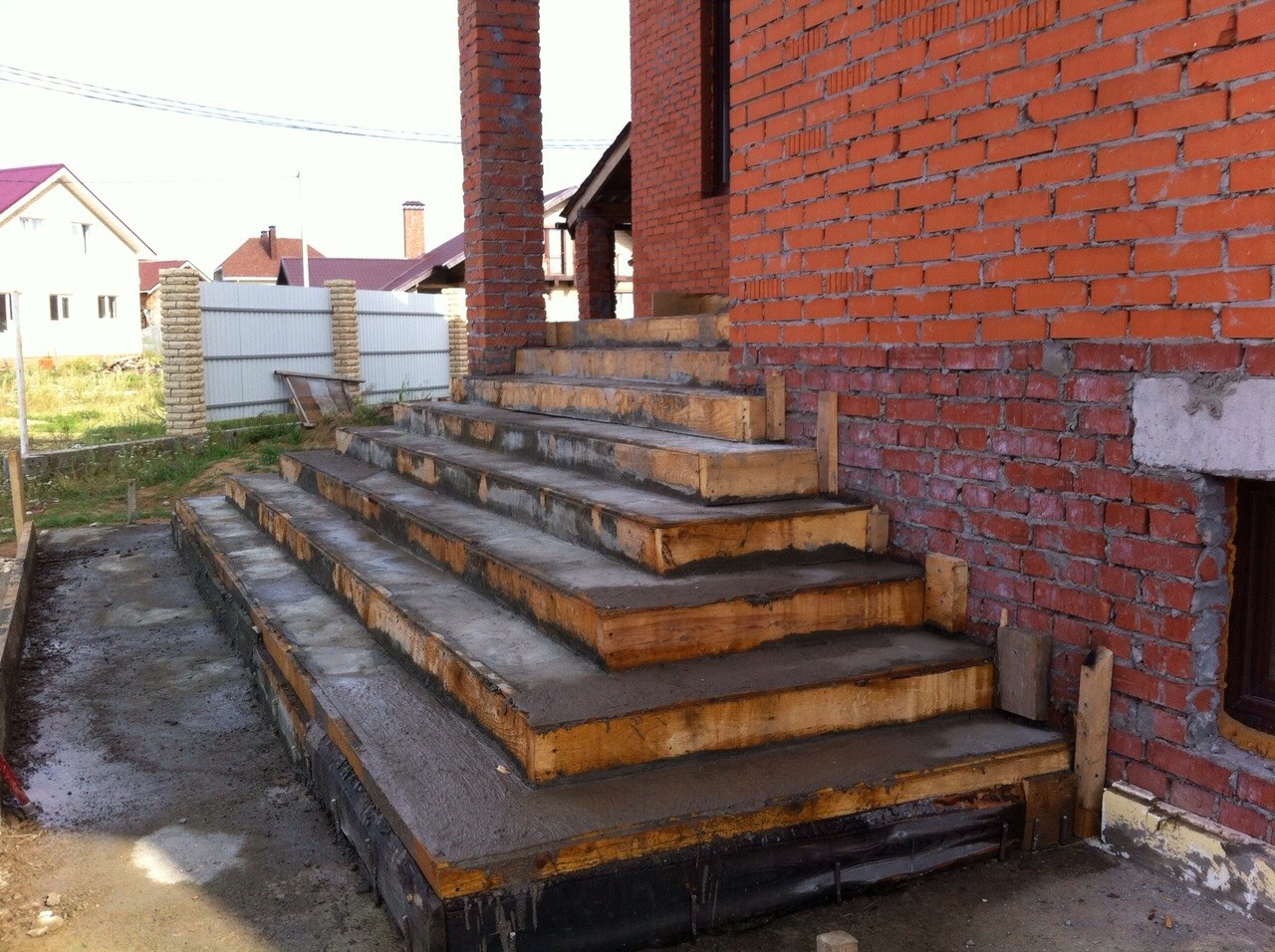
When constructing a structure with multiple steps, consider the following expert advice:
The process of pouring the concrete foundation is essentially identical to that of building a terrace. Initially, the area is prepared, a sand bed is laid, and formwork is constructed. Reinforcement is also needed to strengthen the structure. When concreting, a mortar of cement, crushed stone, and sand in a ratio of 1:2:2 is used. Pouring the mixture should begin from the bottom step, allowing it to set. The finished concrete structure should be covered with plastic for 7 days. Then, you can apply the stone or other materials to the cladding.
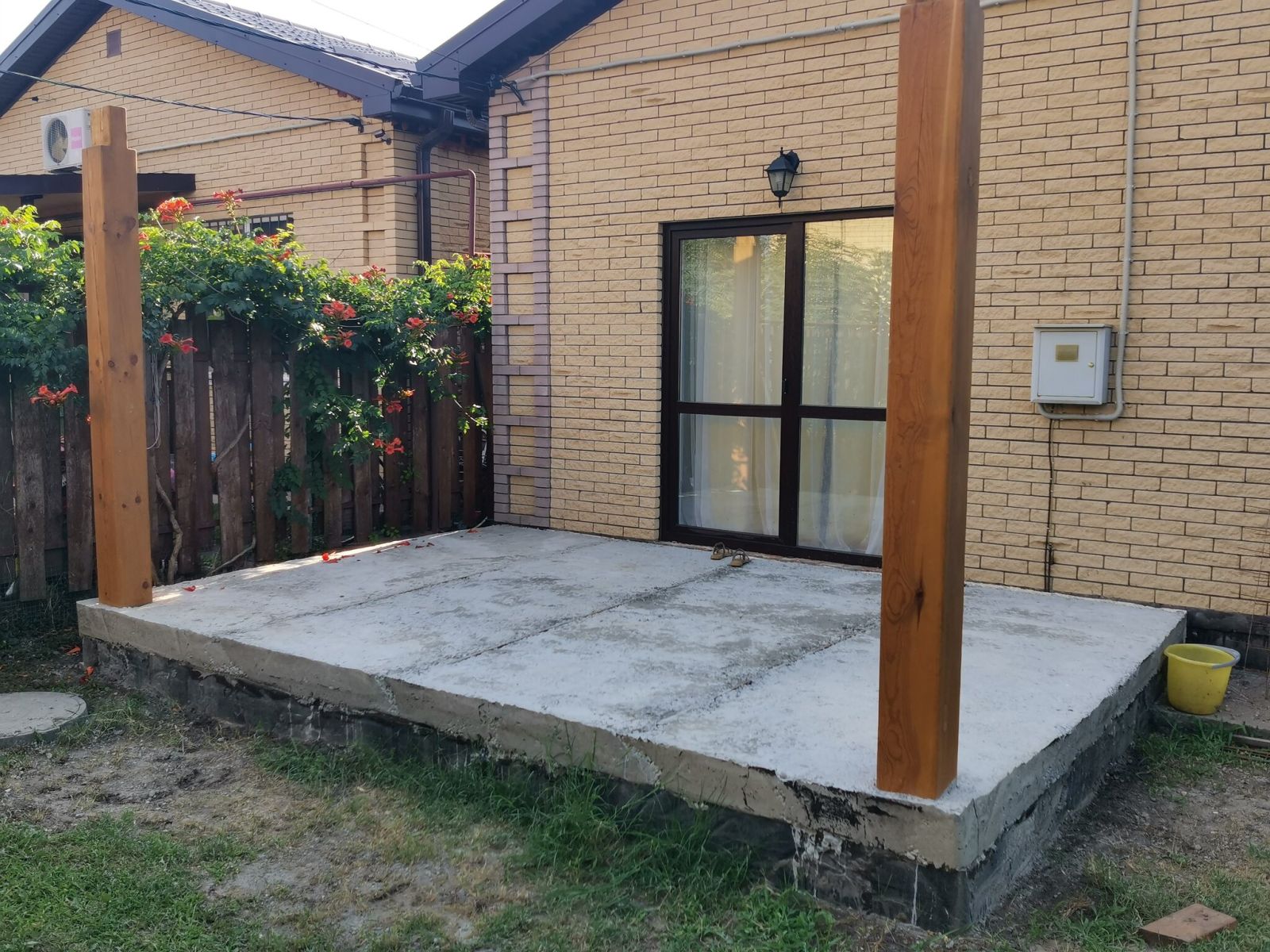
The final cost of constructing a concrete extension is determined by several factors. The choice of foundation type for the porch is also taken into account. Typically, a pile, strip, columnar foundation, or monolithic slab is chosen.
The amount of concrete required, the type of reinforcement and formwork, and the type of paving directly impact the price. The price of a concrete porch is calculated per square meter, taking into account the specifics and complexity of the project. Additional work during terrace construction may include external work such as drainage under the terrace, insulation, tiling, decorative concrete, building a house apron, and more.