We have been working since 2008
and provide high-quality services
5
Rating based on
reviews from our
customers
Daily from 8:00 to 20:00
We have been working since 2008
and provide high-quality services
5
Rating based on
reviews from our
customers
Daily from 8:00 to 20:00
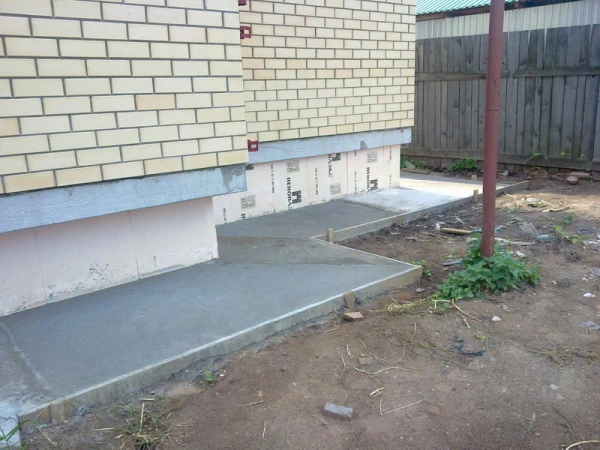
A concrete apron is a foundation element installed on the ground around the building's perimeter. Its primary function is to drain rainwater and protect the building from moisture penetrating into the ground, as well as the building's walls.
Concrete is the most popular material for this type of construction. Additionally, monolithic concrete aprons can also be coated with special coatings that protect them from the elements and improve their appearance. It's also important to note that concrete aprons require regular maintenance and care during use.
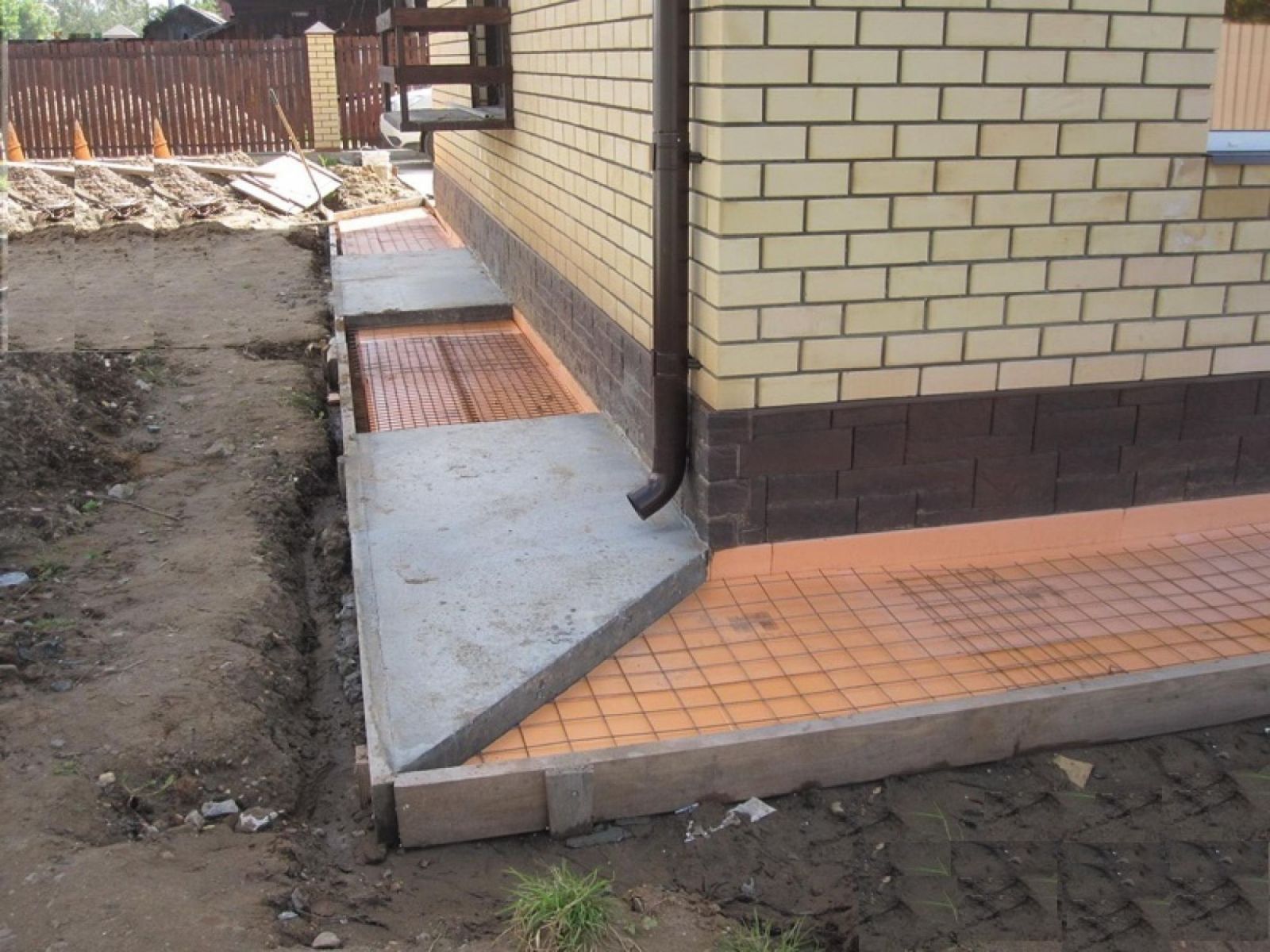
In addition to protecting the walls and foundation of a building from moisture, the concrete apron can also drain water into the drainage system. This element prevents soil freezing around the house and reduces soil heaving. It also protects against vegetation roots. The main properties of this element are as follows:
The concrete apron is constructed from two structural layers. The first is a thin bedding layer, providing a smooth and dense surface for concreting the concrete apron. Its thickness is up to 20 mm. The height of the second layer is more than 10 cm, the coating itself should not allow moisture to pass through.
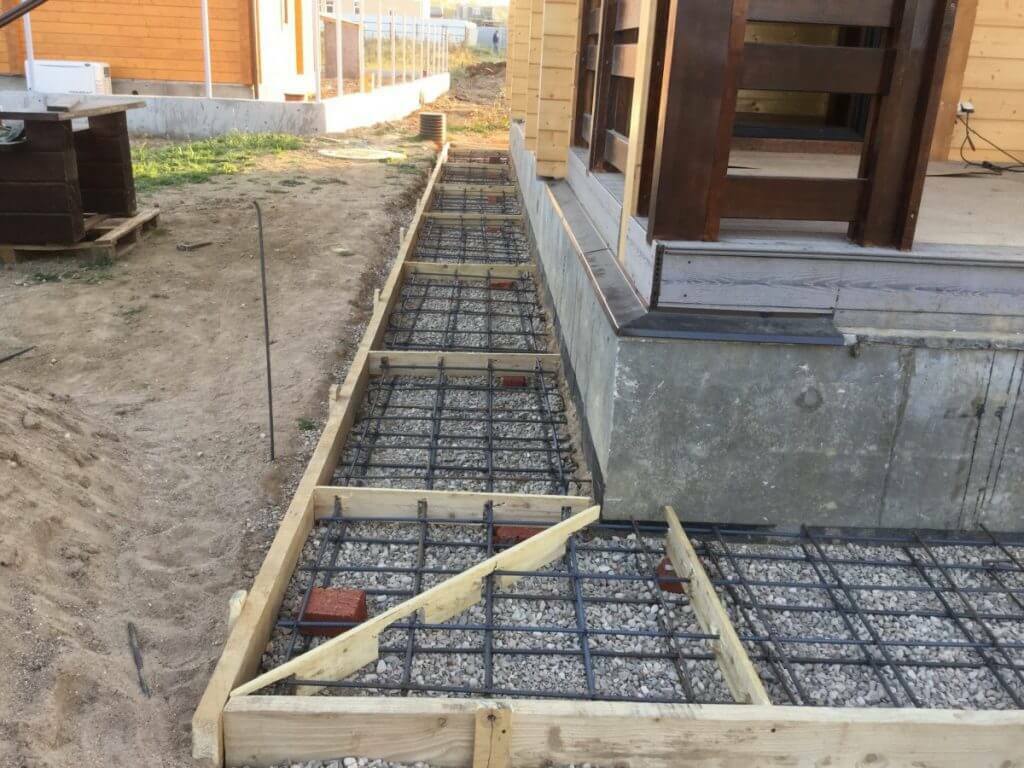
The properties of concrete make it possible to create a dense and hard surface that reliably protects the foundation. The durability of the structure largely depends on proper adherence to the technology. The main stages of installing a concrete blind area are as follows:
The height of the concrete blind area should be at least 5 cm above ground level. When constructing a concrete blind area yourself, you'll need tools such as a level, a shovel, a concrete mixer, and a wheelbarrow for transporting the concrete mix. When preparing the concrete, ensure that the solid aggregate does not settle. It's also important to maintain the correct proportions for the concrete blind area, as this will determine the reliability and durability of the structure. Typically, the proportions for M300 concrete are 1:2:3 (cement, sand, and crushed stone).
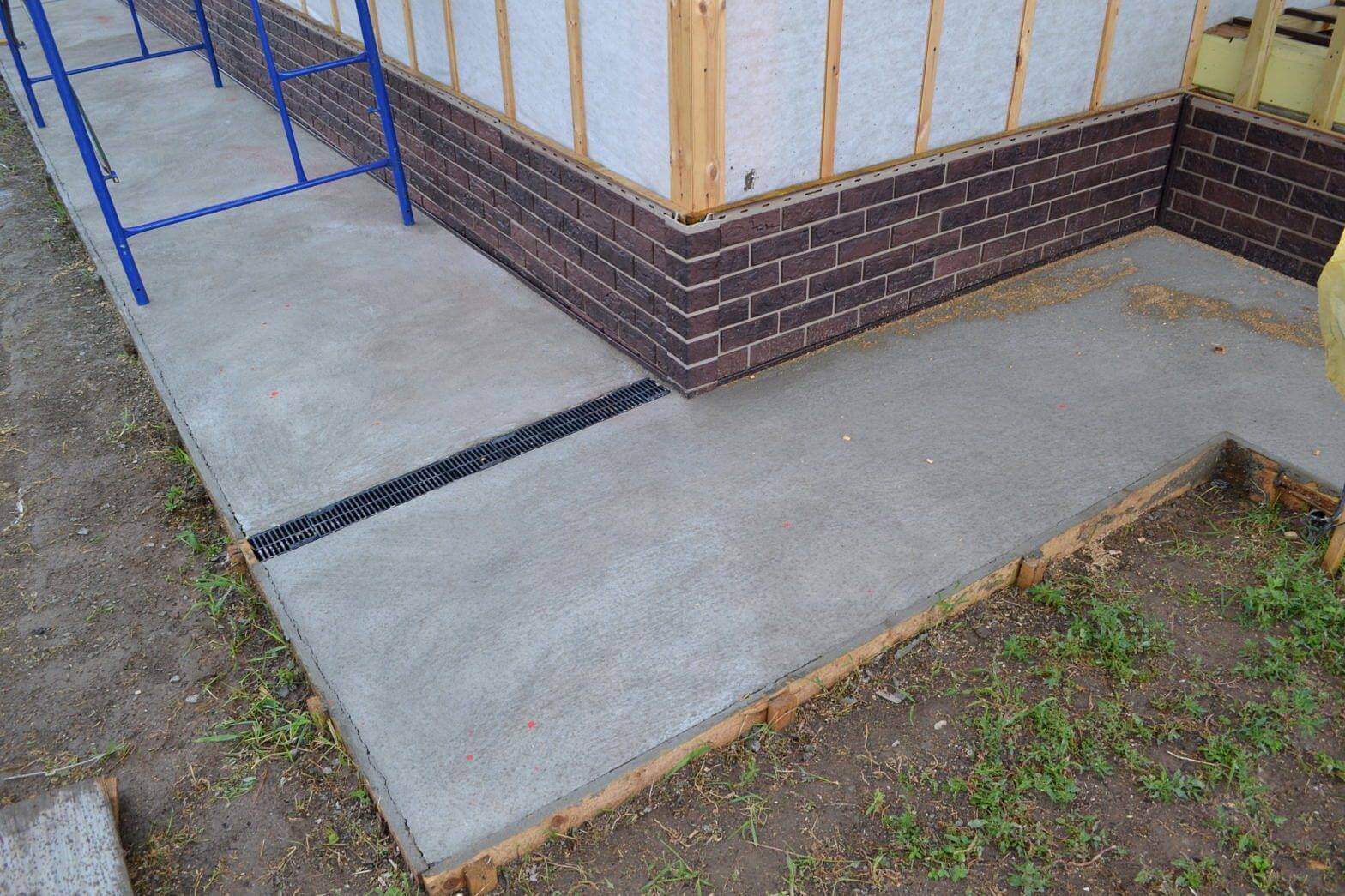
The cost of the work depends on the project scope and the specific materials used. Currently, the average price for standard construction is approximately 400 hryvnias per square meter. Depending on the situation, the cost may include:
The price per cubic meter of concrete is always included. Turnkey construction also includes foundation preparation, including excavation and removal of soil, and compaction with a vibratory plate. The average budget, including all materials and labor, is approximately 1300-1400 hryvnias per square meter.