
We have been working since 2008
and provide high-quality services
5
Rating based on
reviews from our
customers
Daily from 8:00 to 20:00
We have been working since 2008
and provide high-quality services
5
Rating based on
reviews from our
customers
Daily from 8:00 to 20:00
Garden paths and driveways are considered basic exterior elements. Besides their aesthetic appeal, they also serve a functional purpose. Various materials can be used for installing these elements, but concrete is the most cost-effective and practical choice.
.jpg)
Concrete paths can be laid during the foundation pouring stage of construction, as well as after its completion. Standard installation technology includes the following stages:
laying concrete in a 10 cm layer and smoothing it with a leveling plate.
The cost of the work is estimated per square meter. Turnkey services typically include all the above stages, with the final stage being the distribution of the selected soil over the site. The price per square meter for each stage is determined separately, depending on the type of materials and the total scope of work. For example, soil excavation will cost approximately 400 UAH, laying the mixture will cost 350 UAH, and soil distribution, sand backfilling, and compaction will cost 100 UAH each. If geotextile laying is required, this stage will cost approximately 25 UAH.
.

A concrete driveway section is a reliable way to create a solid foundation. During the process, special attention should be paid to the details and sequence of all stages, as well as the correct selection of the base material. Recommendations for constructing a concrete driveway include the following:
After hardening, the concrete can be treated with special impregnations, paints, or decorative coatings.
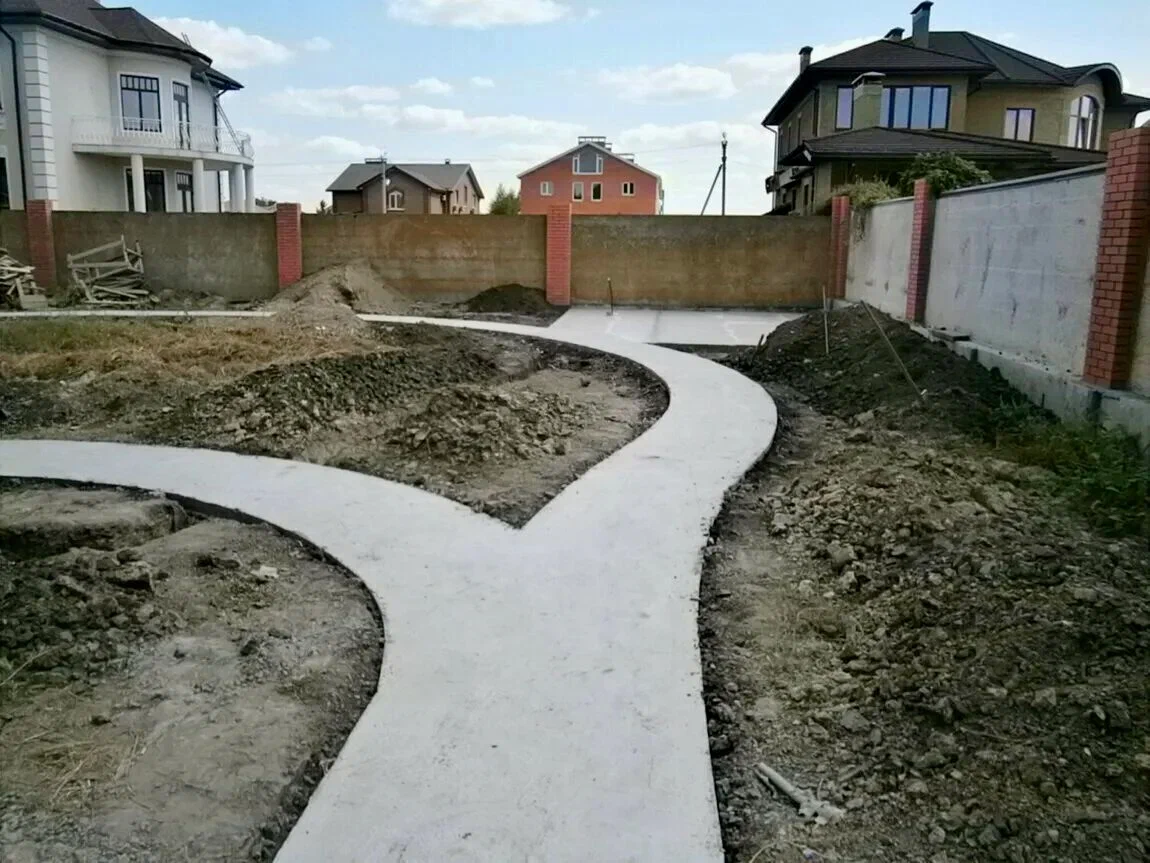
The main advantage of building concrete paths is the optimal price-quality ratio. This format is considered the most popular for creating paths, driveways, and concrete areas. Other advantages include the following:


