We have been working since 2008
and provide high-quality services
5
Rating based on
reviews from our
customers
Daily from 8:00 to 20:00
We have been working since 2008
and provide high-quality services
5
Rating based on
reviews from our
customers
Daily from 8:00 to 20:00
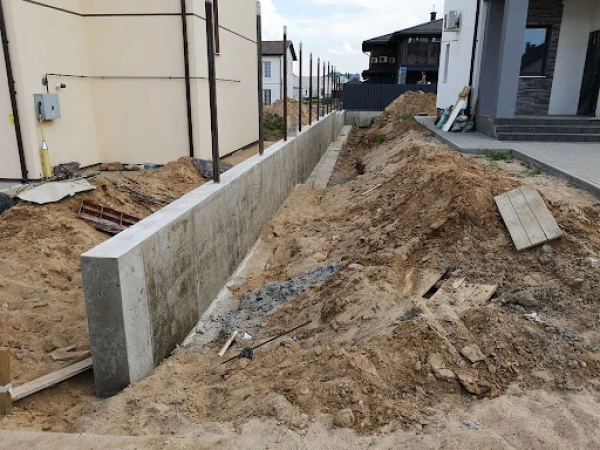
When developing a site with complex terrain, it is recommended to construct a concrete retaining wall. Such structures prevent soil collapse, provide soil retention, strengthen slopes, and protect the area from landslides, collapse, and subsidence. Such structures are used in both private and industrial construction, as well as in the construction of roads, parks, and other facilities. The cost of the work is determined by the scope and complexity of the project, taking into account the price per cubic meter of concrete.
.jpg)
Such structures can be constructed from a variety of materials, and their format is selected depending on site conditions, soil characteristics, and topography.
Types of retaining walls include:
If you need to build a truly durable and reliable wall, concrete is the best choice.
.jpg)
The advantages of such structures are numerous. Among the most significant are the following:
Furthermore, retaining walls with a concrete foundation visually enlarge the space. Used as a design element in a courtyard, they can serve as a support for plants and flowers when creating a multi-level garden or flower bed.
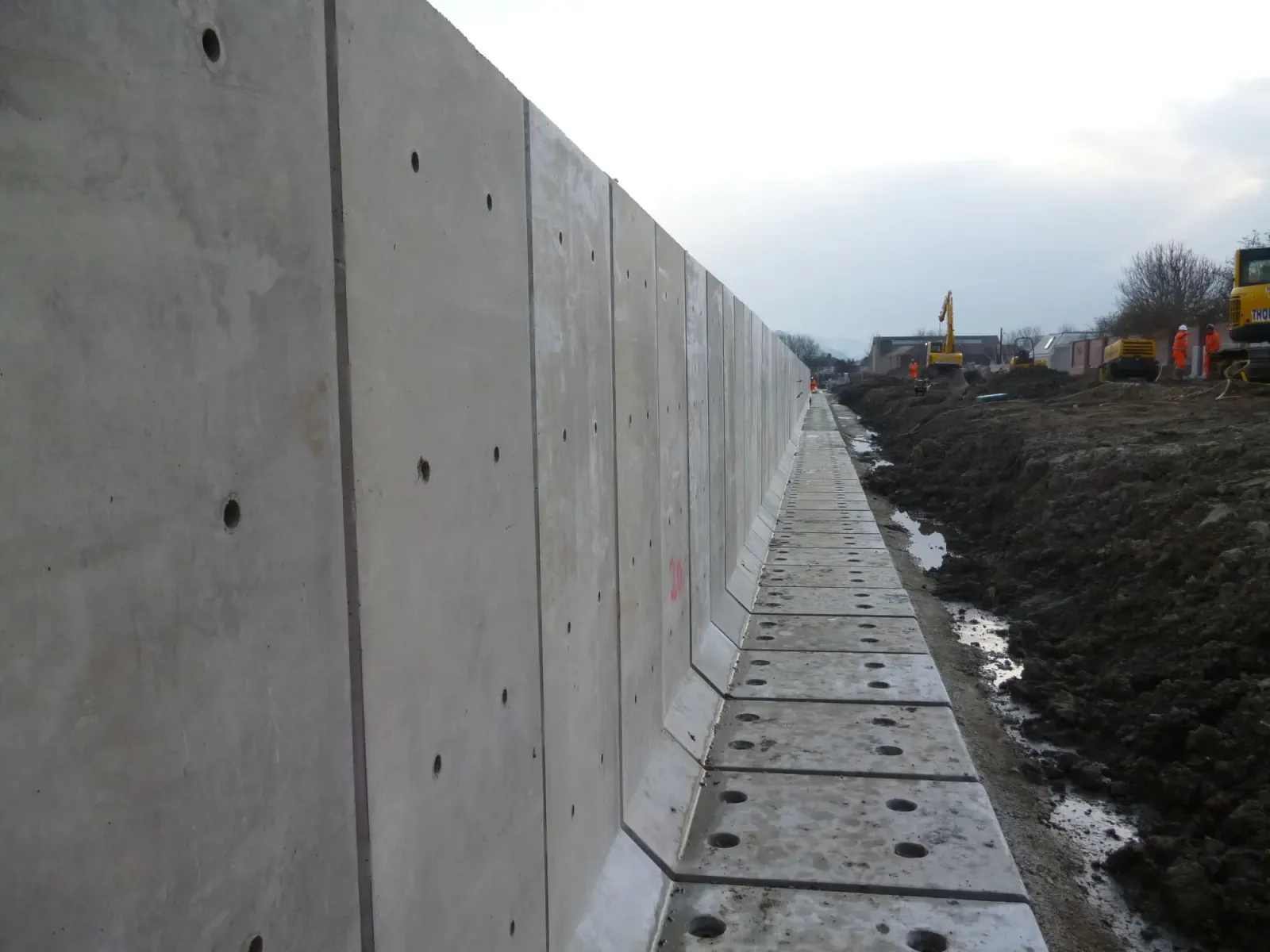
The structure is constructed from monolithic concrete, rubble concrete, or reinforced concrete. Due to the high strength of the material, the wall itself can be thin. After calculating the retaining wall, the work process consists of the following:
Next, concrete is poured into the form. A rubble concrete wall does not require concrete reinforcement. To construct it, the bottom row is laid with large stones in the formwork, filling the voids with crushed stone. After this, a thin layer of M300 concrete is poured. Next, the masonry is laid in rows, grouted.
Concrete retaining wall installation is included in the services offered by the construction company RСС ALBA. By ordering this service, the client can expect the foundation to be built for the wall, as well as a phased implementation of the process, with the project being delivered as a turnkey construction project.